Welcome to my blog.
Aspiring passionate Fashion PR Consultant | Media & Communications Student | Helping small businesses and start-up brands thrive through strategic PR campaigns. Enthusiastic, professional, and adaptable, I bring a wide range of personal skills and attributes to every client. Fueled by a relentless drive for success, I'm here to elevate your brand and make waves in the fashion industry. Let's create magic together!
Just for a bit of background, I am a 22 year old student currently completing a Bachelor of Media and Communications at the University of Wollongong. Majoring in marketing and advertising, minoring in public relations. I am South African, living in Australia for almost 7 years now and loving every moment.
Come along!
In the digital age, influencer marketing has emerged as a game-changing strategy for small business start-ups looking to make their mark. As a thought leader in the PR space, I firmly believe that influencer marketing presents tremendous opportunities to elevate brand visibility, engage target audiences, and drive business growth. In this blog, I will delve into the benefits of influencer marketing for small business start-up campaigns and showcase my thought leadership in the PR industry.
Building Trust and Credibility
Influencer marketing allows small businesses to tap into the trust and credibility established by influential individuals within their target audience. By partnering with relevant influencers, you can leverage their authority and authenticity to promote products. This association not only boosts brand awareness but also instills trust among consumers, who are more likely to trust recommendations from influencers they follow.
Expanding Reach and Targeting
Influencers possess dedicated and engaged followings that can align with your niche or industry. Collaborating with influencers enables you to access their followers, thereby expanding reach to a highly targeted audience. This laser-focused approach ensures that start-ups can effectively connect with potential customers who have a genuine interest in their offerings, resulting in higher conversion rates and improved ROI.
Driving Engagement and Conversions
Influencer marketing is a powerful tool to drive engagement and conversions. Influencers have the ability to create compelling content that resonates with your audience, leading to increased interest and interaction. By crafting impactful collaborations and creative campaigns, you can harness the influence of these content creators to generate buzz, encourage user-generated content, and drive sales.
By embracing this strategy, you and your start up brand can position yourself for success in a competitive marketplace.
As consumers become more conscious of the environmental and social impact of their purchases, the fashion industry is witnessing a significant shift towards ethics and sustainability. This trend not only influences the way brands operate but also has a profound effect on public relations communications. In this blog, we will explore why ethics and sustainability have become crucial considerations in the fashion industry and how they shape effective public relations strategies.
The Rise of Ethics and Sustainability in Fashion
In recent years, the fashion industry has faced increasing scrutiny for its environmental footprint, labor practices, and supply chain transparency. Consumers are demanding greater accountability from fashion brands, seeking garments that are produced ethically and sustainably. This shift is driven by growing awareness of issues such as climate change, worker rights, and waste management.
Impact on Public Relations Communications
Adopting ethical and sustainable practices is not only a moral imperative but also a strategic move in managing public image. Public relations professionals play a vital role in communicating these values to the target audience. By aligning all messaging with ethics and sustainability, PR communications can showcase the brand’s commitment to social and environmental responsibility.
Incorporating Ethics and Sustainability in PR Strategies
Effective public relations strategies in the fashion industry now emphasise ethics and sustainability. You can show dedication to these principles by incorporating them into their storytelling, campaigns, and brand messaging. Show customers that the company you represent shares their concerns by highlighting efforts such as responsible sourcing, eco-friendly production methods, and fair labor practices. PR communications can focus on showcasing the positive impact the brand is making on the environment and society, promoting transparency, and fostering a sense of trust with the target audience.
In an era where consumers demand more from fashion brands, ethics and sustainability have become integral to successful public relations communications. By embracing these values and effectively conveying them to the public, you can not only build a positive brand image but also establish lasting relationships with conscious consumers.
In the fast-paced fashion industry, a well-crafted press release can be the key to gaining media attention and building brand awareness if you are creating a fashion brand. In this guide, I will walk you through the essential steps to create a compelling press release that captures the interest of journalists, editors, and influencers.
Define Your Message
Before diving into writing your press release, it’s crucial to define the key message you want to convey. Identify the unique aspects of your fashion brand that set it apart from the competition. Is it sustainability, innovative design, or a captivating brand story? Clearly articulate your brand’s value proposition, ensuring it aligns with the interests of your target audience and the media outlets you plan to target.
Craft a Strong Headline
A captivating headline is essential for grabbing attention. Keep it concise, engaging, and specific. Incorporate your brand name and highlight the most newsworthy aspect of your announcement. For example, “Emerging Fashion Brand xyz Launches Sustainable Capsule Collection Redefining Ethical Fashion.” Use strong and compelling language to create intrigue and make journalists eager to learn more.
Write an Engaging Introduction
The opening paragraph of your press release should provide a concise overview of your brand and the purpose of your announcement. Hook the reader by showcasing the unique selling points of your start-up fashion brand. Include relevant information such as the brand’s mission, design philosophy, and target audience. Remember to keep the introduction concise and compelling to entice readers to continue reading.
Highlight Key Details and Benefits
In the body of your press release, expand on the details of your announcement. This can include the launch of a new collection, participation in a notable fashion event, or a collaboration with a renowned designer. Emphasize the benefits of your brand or announcement for the target audience, such as how your innovative designs cater to specific customer needs or how your sustainable practices contribute to a greener future.
Include Supporting Information
Add credibility to your press release by including supporting information. Incorporate quotes from key brand representatives or influencers who endorse your start-up fashion brand. Provide additional context through statistics, customer testimonials, or industry recognition your brand has received. These elements reinforce your brand’s credibility and make your press release more impactful.
By following this guide, you can create a compelling press release that captivates journalists and helps your start-up fashion brand stand out in a crowded market.
Goodluck!
If you want more information like this read my other blogs on this site.
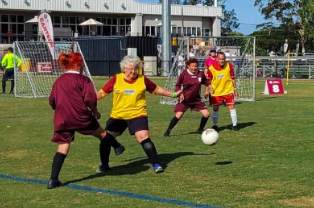
Football is a sport that has captured the hearts of millions around the world. However, for some people, the fast-paced, high-energy nature of traditional football can be intimidating or even physically challenging. That’s where walking football comes in. This unconventional sport, which is similar to traditional football but played at a walking pace, is gaining popularity across the globe. It’s a sport that can be played by anyone, regardless of age, fitness level, or football experience, and offers a wide range of benefits for both physical and mental health. Walking football is not just a fun way to stay active, it can also help to improve fitness, keep you socialised and positively affect overall well being.
Walking football originated in the UK in 2011 as a way for mature players to continue playing football without the physical demands of traditional football. The sport quickly gained popularity and spread to other countries, including Australia, with walking football leagues and tournaments now being played in all states.
Steven Dunwell, a now 73 year old walking football player who started out as a reluctant participant at the age 69, became hooked and ended up making it all the way to The Walking football World Cup in London 2019. He even scored the first goal for the Australian side. In our chat about how he caught the walking football bug, he relayed how he was a state league football player in the 70s and 80s. Later in life, he needed a double knee replacement and after 6 months of rehab was invited to do a cameo appearance at a walking event….and the rest was history. The nature of the sport allowed the old sporting rush he used to feel but without the high impact on his body. He loved it! His natural competitive spirit had to come out eventually and in combination with the huge social outlet he found on the field and off, he kept coming back for more. The health benefits were an added benefit as he keeps active and his joints passively mobile.
Stevens message to anyone intrigued by the idea of walking football is to “just give it a go”. A perfect opportunity arises in Wollongong on Saturday the 13th May. The competitive and social tournaments for womens over 40’s and mens over 50’s and 60’s will be held at The University of Wollongong sports hub and begins at 9:30am. If you are new to the game, a come and try session will be held prior to the competition at 8:45am. In true Aussie spirit, give it a crack and who knows, the bug might bite you too. It could be the exact activity or social solution you need.
Some action shots of men and women playing walking football.
The experience of preparing and delivering a presentation that shows how your values shaped your responses to the story that you shared:
While working on this project, where I had to self-reflect on many intangible ideas like my core values, my work ethic and my emotional quotient in various life situations, I realised that I had learned most of these things from my mother. This process of identifying my key qualities, became a torchlight that began to clearly reveal just where I had modelled these ideas on. It was a natural leap to recognising that she not only rubbed off on me but actually inspired me. And so this realisation shaped my desire to interview her and shaped my questions for her.
My personal connection with her suddenly felt more than genetic. I was a living example of nature AND nurture. I felt excited to hear her answers and proud to share them. Her story barely touched on personal adversity, migration or loss, even though I know it was woven through the fabric of her life, her account of her working life was positive and focussed on resilience, adaptability and persistence. This alone was reflective of the qualities I admire in her but the presentation was more focused on career.
As stated in my video, my mum would be the highest ranking member of the club of life. Michael White (1997) depicted the notion that people’s identities are shaped by what might be referred to as a “club of life” and brought the term “re-membering” into narrative therapy. This metaphor of the “club of life” offered the notion that each of us has members in our club of life who have contributed in different ways to how we have come to feel ourselves. These people who are a part of our “club of life” frequently held positions of varying authority or prominence. As an illustration, we give one person’s opinion of us more weight or attention than another. My mum whose opinions matter the most to me has the greatest impact on my identity and is on the highest level of my club of life.
Furthermore, re-remembering dialogue focuses on interpersonal ties based on common commitments, beliefs, life knowledge, and skills. According to White, examining membership in the club of life allows for the exploration of knowledge and abilities in the context of their particulars and the rich description of numerous major discoveries, learnings, realisations, conclusions, and problem-solving techniques. This relates directly to why I chose my mum – my exploration through interviewing and presenting her ‘story’ represents a part of my story and how I attempt the future of my work.
References
Carey, M & Russel, S 2002, “Remembering: responding to commonly asked questions”, The International Journal of Narrative Therapy and Community Work, no. 3.
As a 21 year old, without too much life experience yet, I recently had a very confronting experience as a young adult trying to find financial independence. The hospitality business I work for was badly affected, more candidly, all but destroyed by the most recent flooding of the Woronora River.
The cafe I work for is situated on the banks of the Woronora River. It has a portion of picturesque outdoor seating and also rents out kayaks and canoes. I do about 35 hours a week at this cafe and it funds my living and leisure expenses. I think back to last Christmas, over which I got Covid and spent my time indoors while the sun shone, and realised it has been raining heavily for 6 months. The cafe has very little patronage on rainy days. So already things were getting tricky. I was regularly sent home early as the cafe owner tried to manage wages. I could see how the rain was damaging furniture and had turned the car park into a swamp, so when they had a minor flood in February and then again in March I felt so sorry for them. It cost them a couple of days’ trade each time and the headache of a muddy clean up. But a few months later, on July 4th, the minor flooding changed to a more ominous and destructive event. And this event is the root of a major disruption for myself at work which has profoundly affected my experience of adult life. Or at least this is the narrative I tell myself.
On the weekend of the 2 July, just as the school holiday was about to kick off, the saturated ground, the 110% full woronra dam and the continuous rain bombs syndney was experince converged to create a 1 in 100 year flood event, unseen in the community in over 50 years. The river became a raging torrent, ripping off pontoons and jetties. The water rose extremely quickly, it poured down the mountains and rose out of storm water drains. Within minutes the whole property was flooded chest deep. People and pets were evacuated from their homes and some even rescued by the fire brigade and SES.
An Evaluation
Looking at Australian social worker and narrative therapist Michael White implemented a principle where he wrote “in order to express one’s experience of life, one must distinguish the experience from what it is not” (White 2005, p. 15). Describing this conceptual framework as “the absent but implicit” (White 2000, p. 41)
When retelling an event, experience or disruption, told to ourselves or by others, we must determine what is missing in the retelling. This can be described as ‘double listening’ and can help discover the duality within storytelling, uncovering the hidden factors of a person’s experience (Freedman 2012, p. 2). This process created a foundation for Whites narrative therapy and conceptual framework. Experiences that have already been given meaning provide a contrasting backdrop which ‘shapes’ the expression being foregrounded (Carey, Walther & Russell 2009, p.319) or in other words, looking at the opposite of a person’s experience we can better understand the experience itself.
The Aftermath
Needless to say… operations halted and as a casual employee of the cafe, my job was suspended. I was quite shocked about the state of the cafe and couldn’t imagine how it was ever going to get repaired, but afterwards, it sank in that my income had disappeared in one moment. I had all my eggs in one basket so to speak. And the basket had just dropped.
Following my recent return to work as renovations to the damage are finally complete – 2 months later. I feel more grateful than ever to have access to a job and the money that follows.
So why did losing my job affect me so much? Why did I feel the job loss beyond losing an income?
Using Whites “absent but implicit” (White 2000 p.41) theory and inverting my problem, I can see an implicit meaning. I see it challenged my perception of “being ahead of the game or living my best life’. Losing my ability to add to my savings every week, not having the extra money to do little things for myself, like getting my nails done or buying festival tickets when I want – all things that I used to be able to do because I worked hard enough to live to the fullest. Or as I believed. This all ultimately challenges the importance of working and making money for myself. As Well as my ego.
I learnt that I can get by on a lot less than I thought, and I don’t need to go to every social event to enjoy my life. Losing my job was tough but learning to accept the circumstances and go with it helped a lot. By telling this story I also learnt to look at experiences through a completely different lens as well as the importance of narrative therapy and its way to determine professional and personal values.
References
Carey, M, Walther, S & Russel, S 2009 ‘The absent but implicit: A map to support therapeutic enquiry’, Family Process, vol. 48, no. 3, pp. 319. Accessible here.
Freedman, J 2012, ‘Explorations of the absent but implicit’, International Journal of Narrative Therapy & Community Work, no. 4, pp. 1-10. Accessible here.
White, M 2000, ‘Re-engaging with history: The absent but implicit’, Reflections on Narrative Practice: Essays and interviews, Dulwich Centre Publications, Adelaide, pp.
White, M 2005, ‘Children, trauma and subordinate storyline development’, International Journal of Narrative Therapy & Community Work, no. 3 & 4, pp. 10-21. Accessible here.
Creating art can make a lot of people feel vulnerable even within our ever changing digital world where almost everything is accessible. Therefore I wanted my media niche to create a safe place to inspire people to create art. With the use of an instagram account dedicated to all things creative. Providing a source of inspiration and a starting point of how the art process begins.
Media ecology emphasizes the environment in which communication and technologies operate and spread information. This relates to, in my case, Instagram. A platform that I used. Instagram is a great platform as it offers many different features which were useful in my ethnographic research. Analytical insights, audience breakdowns available in graphs and charts, content reach and many sharing options such as stories, posts, highlights and reels. This was furthemore useful in my autoethnography research to explore my personal understanding in the overall experience. Instagram is a very well known platform home to millions of people, which allowed a larger scope for my media niche and persona to be developed simultaneously expanding my understanding under art tutorials and why they can be highly inspirational and useful for people starting out in the creative world.
ethnographic research
Observation as a research method that I undertook involves the observer being a member of the setting in which they are collecting data ((Bryant , ) .By frequently entering my media niche as an audience member and observing from a different perspective than being the continent creator, the more information I was able to absorb and gather from the interactions. Ethical considerations were key in developing field notes and epiphanies and by “mapping methods and social maps have been used by researchers as a means to document and analyze social networks and interactions as well as by those whom they study to gain an understanding of participant perspectives” (Powell, 2010).
Partaking as an audience member provided a basis of information for me to expand on my research findings, in grasping an understanding of thick description. The term ‘thick description’ was made famous by anthropologist Clifford Geertz who wrote through thick description as a way of capturing his brand of ethnography in the 1970s. Thick description has become a way of qualitative research, going beyond surface appearances to include the context, detail, emotion, and webs of social relationships. It presents the significance of an observation, event or behaviour. Thick description includes voices, feelings, actions and meanings (Ponterotto, 2006).
Moreover, reflecting on my findings helped me critically reflect on my continent and what works and grasp the attention of my content. Being able to learn from my observations and then apply it to my own digital artefact was an extremely powerful experience in adapting my methods. Therefore helping me come to more conclusions about why art tutorials can be inspirational and helpful to the audience.
epiphanies
Analysing my epiphanies. The first one I encountered was asking myself the question, why am I attracted to certain pages. Looking and reflecting on my emotions using the 3 dimensions that I broke it down with in a previous blog: (https://kyrasblog.design.blog/2021/10/11/analysing-my-observations/ ) – subject matter, visual composition and emotion enabled a personal evaluation on what makes me attracted to that page. This epiphany led me into a research methodology of reflexivity. “Reflexivity involves the process of an ongoing mutual shaping between the researcher and the research” (Attia & Edge, 2017) This is depicted through my breakdown of my emotions or feelings to help me ‘shape’ a conclusion. Reflecting on this epiphany through reflexivity has helped me understand why feeling and emotion are central to reflexive processes, colouring the perception of self, others and social world. Reflexivity as an adaptive and emergent methodology reduces the likelihood of the researcher’s bias. Because I am consciously stepping back from action in order to theorise what is taking place.
Furthermore another epiphany that struck me was what type of persona attracts me? From this question I asked myself when conducting observation of other accounts made me look a little deeper into what personas are composed of. Leading me to the 5 dimensions of public persona. I took interest in the first dimension comprising ‘ ‘publicness’ – “from a small public of close and intimate friends to a massive global public audience” (Moore, Lee & Barbour, 2017) which is enabled by the act of sharing. What you share and how you share it begins to make up the persona of one’s online presence. In regards to the personas that I am attracted to through observation, which are relatable and transparent more than those who kept their persona to strictly business. In further research following the dimension of publicness and mediatisation or “an expression of self” through transparency and relatability is the optimal public exposure and persona which I in turn shifted my concerns to within my own digital artefact as I wanted to adopt this feature and portray that persona because of my attractions towards it.
One of the most important things I realised within this journey was consistency is fundamental to the audience. observed and understood through my own work and others that content consistency establishes credibility within your niche simultaneously building trust within your viewers or audience’s mind, strengthening your page’s reputation. A theory called ‘Uses and gratifications theory‘ which is a way of measuring within the social media world. The theory is based on ‘that individuals seek out media that fulfil their needs and leads to ultimate gratification’ (Lariscy, Tinkham, & Sweetser, 2011). Researching this theory I found that it is directly related to my epiphany of content creation consistency. I needed to create content to meet my audiences needs and their wants to see art creation. Which is what creates the like, share and follow interaction loop. My content is what creates the fulfilment in ‘gratification and joy’ within the audience.
References
Attia M & Edge J, “Be(com)ing a reflexive researcher: A developmental approach to research methodology”, Open review of educational research, vol.4 , no.1.
Ponterotto, J 2006, “Brief note on the origins, evolution and meaning of the qualitative research concept ‘thick description’”, The Qualitative Report, vol. 3, no. 11, pp. 538-54.
My DA has evolved through utilising an auto ethnographic approach. I continue to gain a deeper understanding and a wider knowledge of my media niche and all the variables like emotions, feelings, aesthetics that play a role within it.
Auto ethnographers use their personal experiences to produce meaningful, accessible content acknowledging and accommodating subjectivity and emotionality as data for social investigation. (Ellis, et al 2010, p. 1-2)
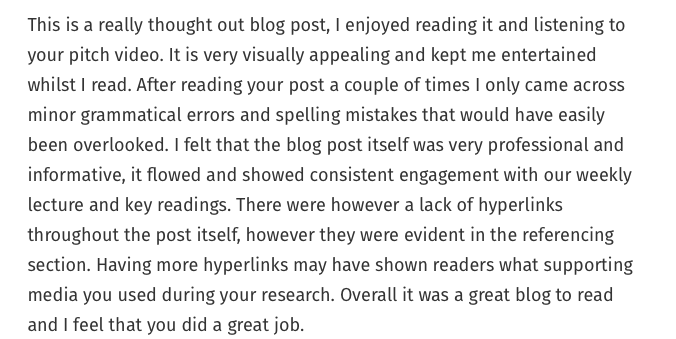
By taking in the feedback received from my peers and implementing this into my BETA has helped my blogs evolve. Looking at the comments depicted below, you can see that a peer mentioned including more hyperlinks within the blog as it would be useful for my audience to be able to access my background research to further understand what I’m talking about.
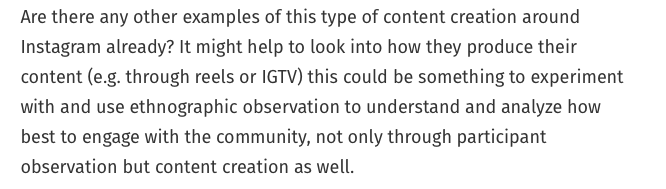
The second comment depicted below suggests looking at how other content creation pages produce their content. I have taken this onboard and displayed some Instagram pages that I interact with within my video above , and the content that they produce. Doing so I have understood the best ways to interact with my audience is through Instagram stories. Using instagram stories creates the most interaction as my audience can easily interact with features I use such as polls or questionnaires within these stories.
Photos of comments
Content schedule
Week 11
Make story highlights of all the stories I have put up
Week 12
Make a reel + 3 posts
Week 13
3 more posts + more observation on other accounts
This is my adapted content schedule for the remaining weeks of this semester. I hope to churn out as much content as possible to see my interaction grow.
Why am I attracted or drawn to certain content creators’ pages?
Looking and reflecting on my emotions using the 3 dimensions that I broke it down with in my previous post: subject matter, visual composition and emotion allows a personal evaluation on what makes me attracted to that page. This epiphany led me into a research methodology of reflexivity. “Reflexivity involves the process of an ongoing mutual shaping between the researcher and the research” (Attia & Edge, 2017) This is depicted through my breakdown of my emotions or feelings to help me ‘shape’ a conclusion. Reflecting on this epiphany through reflexivity has helped me understand why feeling and emotion are central to reflexive processes, colouring the perception of self, others and social world. Reflexivity as an adaptive and emergent methodology reduces the likelihood of the researcher’s bias. Because I am consciously stepping back from action in order to theorise what is taking place.
What type of persona attracts me.
Upon the research of the 5 dimensions of public persona I took interest in the first dimension comprising ‘ ‘publicness’ – “from a small public of close and intimate friends to a massive global public audience” (Moore, Lee & Barbour, 2017) which is enabled by the act of sharing. What you share and how you share it begins to make up the persona of one’s online presence. In regards to the personas that I am attracted to through observation, which are relatable and transparent more than those who kept their persona to strictly business. In further research following the dimension of publicness; the mediatised dimension of persona or “an expression of self” through transparency and relatability is the optimal public exposure and persona which I in turn shifted my concerns to within my own digital artefact as I wanted to adopt this feature and portray that persona because of my attractions towards it.
Consistency in content creation is key.
One of the most important things I realised within this journey was consistency is fundamental to the audience. observed and understood through my own work and others that content consistency establishes credibility within your niche simultaneously building trust within your viewers or audience’s mind, strengthening your page’s reputation. A theory called ‘Uses and gratifications theory‘ which is a way of measuring within the social media world. The theory is based on ‘that individuals seek out media that fulfil their needs and leads to ultimate gratification’ (Lariscy, Tinkham, & Sweetser, 2011). Researching this theory I found that it is directly related to my epiphany of content creation consistency. I need to create content to meet my audiences needs and their wants to see art creation, painting, and the artistic process behind the final product. Which is what creates the like, share and follow interaction loop. My content is what will create the fulfilment in ‘gratification and joy’ for the audience member.
References
Attia M & Edge J, “Be(com)ing a reflexive researcher: A developmental approach to research methodology”, Open review of educational research, vol.4 , no.1.
Whiting, A. and Williams, D 2013, “Why people use social media: a uses and gratifications approach”, Qualitative Market Research: An International Journal, vol.16, no. 4, pp.362–369.
An epiphany is an experience of striking realisation or simply put it is “something that stands out to us when being an audience member” (Week 5 Part 1, UOW lecture)
The epiphanies that struck me when participating in my niche as an audience member are
why I am attracted or drawn to certain content creators’ instagram pages.
What type of persona attracts me
Consistency in content creation is key
1
Looking at these epiphany; why am I attracted to certain content creators pages, more than others” I started breaking this questions down into sub points. asking myself, is there an aesthetic? what exactly makes the page stand out? . Looking further into this I divided it into 3 categories; 1 being subject matter, 2 Visual composition and 3 Emotion. Subject matter being art tutorials themselves. Under the medium of acrylic painting that is what I do myself. Visual composition being the broad aesthetic of the content. Not theme based however very bright, colourful or expressive paintings, and lastly emotion being how the content makes me feel. Looking and reflecting on my emotions depicted on the different insta page allows a personal evaluation.
2
Looking at personas through observation that I am attracted to, I noticed a trend. Each creative art account that I found the most relatable was creators who carry out their passion on the side, making art was not their full time job. Much like myself, a uni student trying to keep up with my DA work on the side. Those who are transparent with their followers about their time constraints and other priorities in their life attract me the most because of the relatability. Through this observation as mentioned in my beta I outlined that I have not stuck to my content schedule because of external life reasons. Yes this has repercussions of less interaction from the audience however I noticed that my followers appreciated the honesty and I had a few swipe up likes on my story which was apologizing for the lack of content.
3
Furthemore looking at my 3rd epiphany, I have observed and understood through my own work and others that content consistency establishes credibility within your niche simultaneously building trust within your viewers or audience’s mind, strengthening your page’s reputation. When following an account for their content and they don’t post consistently, one often simply unfollows. Seeing this perspective as an audience member I needed to shift this mindset and remind my niche audience of my account. They follow for a reason so to keep retaining their interest and interaction consistency is key.






 Kyras blog